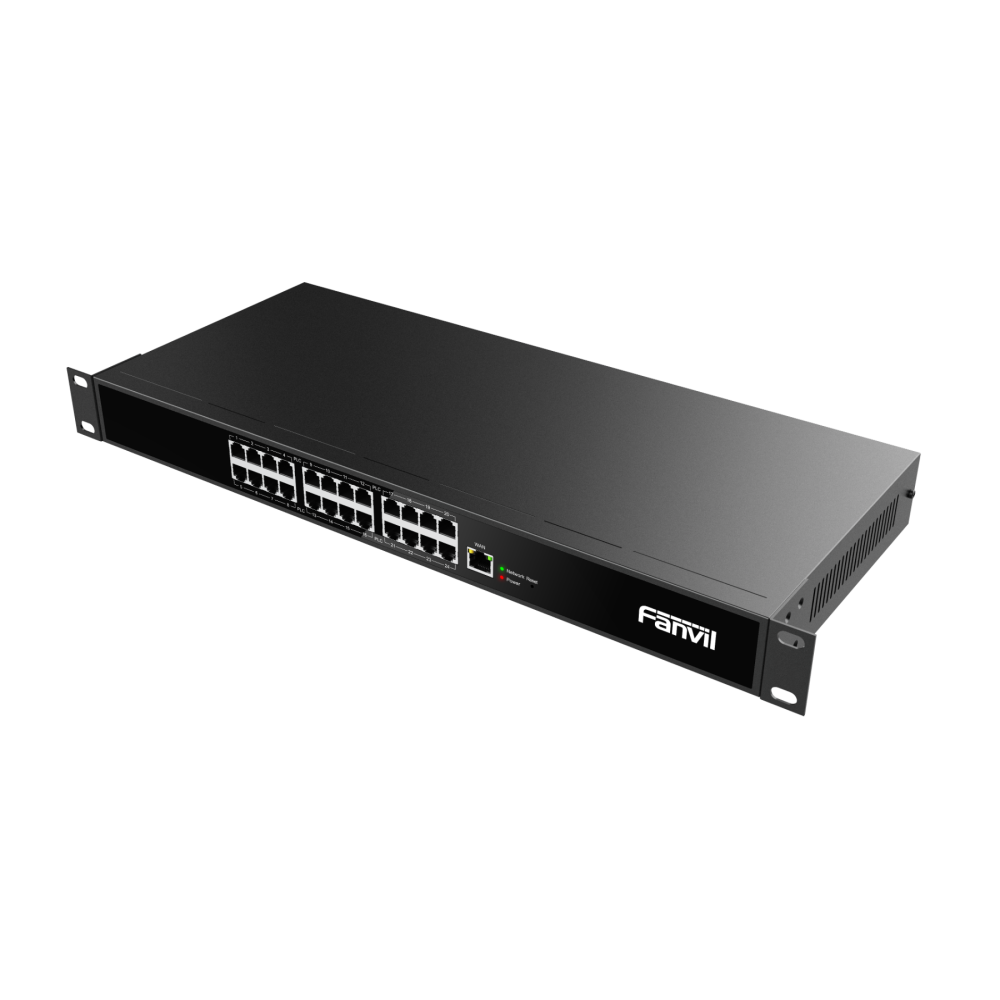
We’ve provided several answers to questions related to Fanvil Desktop and Door Phones , see some other helpful Q&A related to this product.
-
Question: What is the default password for Fanvil IP phone?
Answer: The default password for Fanvil IP phones is typically "admin" for both the username and password. However, it's important to change the default credentials to enhance security and prevent unauthorized access to the phone system.
-
Question: How should I install Fanvil 2-Wire devices for best results?
Answer: Installation method is a key factor for minimizing labor and downtime. The best Fanvil 2-Wire Solutions offer plug-and-play installation and support for various mounting options, including wall-mounted, flush-mounted, and desktop configurations. Products like the PN8 2-Wire PoE Switch and PN1 2-Wire Converter are designed for easy integration into existing infrastructures, requiring minimal setup. The X303-2 Wire IP Phone further adds flexibility with multi-angle and wall mounting options. There are several installation methods available, ensuring you can select the best approach for your project.
-
Question: What's the ideal weight for Fanvil 2-Wire devices before buying a 2-wire kit?
Answer: Weight considerations matter for installation ease and support structures. The best Fanvil 2-Wire Solutions are lightweight enough for simple wall or desk mounting, yet robust for reliable performance. Devices like the PN1 2-Wire Converter are designed to be easily mounted, and the X303-2 Wire IP Phone is suitable for multi-angle desktop use. The availability of different form factors means you can choose the ideal weight and structure for your specific needs.
-
Question: What are the ideal size specs for Fanvil 2-wire devices before I buy a 2-wire solution?
Answer: Device dimensions are important for installation planning, especially if space is limited or you need to fit equipment into existing enclosures. The best Fanvil 2-Wire Solutions offer compact and versatile form factors, making them suitable for wall mounting, desktop use, or flush mounting. Products like the X303-2 Wire IP Phone are designed for flexible installation, while the PN1 2-Wire Converter is compact for discreet placement. With a range of device sizes available, you can select the best fit for your environment.
-
Question: What power supply specs should I look for before buying Fanvil 2-Wire devices?
Answer: Power supply requirements are important to ensure your devices operate efficiently and safely. The best Fanvil 2-Wire Solutions come with built-in or included power supplies that support a wide voltage input (typically 100~240V), making them versatile for different regional standards. For example, the PN8 2-Wire PoE Switch and PN24 2-Wire PoE Switch include their own power supplies by default, and the PN1 2-Wire Converter also includes power, with recommended spares available. This flexibility makes it easy to match the power needs of your installation, and multiple options are provided to suit a range of requirements.
-
Question: What’s the recommended temperature range for Fanvil 2-Wire devices before I buy?
Answer: The operating temperature range is an important factor if your devices will be installed in environments with varying temperatures. The best Fanvil 2-Wire Solutions are designed to function reliably within a wide temperature range, ensuring consistent performance in both standard office settings and more challenging locations. While specific temperature ranges are not listed in the product summaries, Fanvil devices like the PN8 2-Wire PoE Switch and X303-2 Wire IP Phone are built for enterprise environments and can typically withstand standard indoor temperature variations. With several options available, you can choose the right device for your specific deployment scenario.
-
Question: What are the top data speeds supported by Fanvil 2-wire kits?
Answer: Data transmission rate affects the speed and reliability of your network communications, so it is a vital specification. The best Fanvil 2-Wire Solutions provide stable and sufficient bandwidth for high-definition voice and data, even over long distances. Fanvil devices typically support transmission distances up to 300 meters for both power and data, as seen with the PN8 2-Wire PoE Switch and PN24 2-Wire PoE Switch. The PN1 2-Wire Converter also extends network reach, making it suitable for larger buildings. With these options, you can find the right balance between distance and speed for your installation.
-
Question: Which cable type works best with Fanvil 2-wire systems before I buy?
Answer: Choosing the right compatible cable type is important for ease of deployment and cost savings, especially if you want to reuse existing wiring. The best Fanvil 2-Wire Solutions support common cable types like PSTN and RVV cables, allowing you to upgrade to IP-based systems without expensive rewiring. All highlighted products, including the PN1 2-Wire Converter, PN8 2-Wire PoE Switch, and PN24 2-Wire PoE Switch, support these cable types for both power and data transmission. This compatibility ensures maximum versatility and cost-efficiency, with several options available to match your existing infrastructure.
-
Question: How many devices or ports can Fanvil 2-wire kits handle at most?
Answer: The number of supported devices or ports is crucial because it determines the scalability and flexibility of your installation. The best choice depends on the size of your deployment—smaller setups may only need a few ports, while larger enterprises benefit from switches that support many devices. Fanvil offers solutions like the PN8 2-Wire PoE Switch with 8 ports for mid-sized installations and the PN24 2-Wire PoE Switch with 24 ports for larger environments. Devices such as the X303-2 Wire IP Phone are compatible with both, offering flexibility for expansion. This range ensures you can select the ideal port count for your needs.
-
Question: Which PoE options work best with Fanvil 2-Wire kits before I buy?
Answer: Power over Ethernet (PoE) support is a key consideration when purchasing Fanvil 2-Wire Solutions because it allows both power and data to be transmitted over a single cable, simplifying installation and reducing infrastructure costs. The best PoE options are those that can deliver sufficient power for multiple devices across significant distances, while also providing reliable network connectivity. In this category, products such as the Fanvil PN8 2-Wire PoE Switch and Fanvil PN24 2-Wire PoE Switch provide seamless PoE functionality to multiple 2-wire devices, making them ideal for deployments requiring plug-and-play simplicity. The Fanvil X303-2 Wire IP Phone is designed to leverage this PoE infrastructure, ensuring both power and network access through existing wiring. Multiple options are available, so you can choose the PoE solution that best fits your project size and requirements.
-
Question: Which compliance standards or certifications should I check for before buying Fanvil 2-wire devices?
Answer: Compliance and certifications ensure that your devices meet industry standards for safety, performance, and interoperability. The best Fanvil 2-Wire Solutions are designed with these standards in mind, making them suitable for enterprise and commercial environments. While specific certifications are not detailed in the product summaries, Fanvil’s reputation for quality and the inclusion of enterprise-grade features in devices like the PN8 2-Wire PoE Switch and X303-2 Wire IP Phone ensure you are getting products built to stringent requirements. With a variety of certified and compliant options, you can select the right product for regulatory or organizational needs.
-
Question: How to wire a 2 wire 4 20mA sensor?
Answer: To wire a 2-wire 4-20mA sensor, connect the positive lead of the sensor to the positive terminal of a power supply, typically between 12-24V DC, and connect the negative lead to the positive terminal of the input device (such as a PLC or data acquisition system). Then, connect the negative terminal of the input device back to the power supply's negative terminal, completing the loop circuit.